Welcome to my case studies. In this section, I share examples of my strategies and reflect on how I navigated the challenges in my work. So, feel free to share your thoughts below. I value your opinions and would love to learn about your experiences.
Artificial Intelligence in the Graphic Design Industry.

Artificial Intelligence is quickly becoming relevant in many aspects of our lives. Corporations and governments are adapting this technology in many ways including improving their bottom line or controlling their message. This has got me thinking, about how AI will impact our lives, and what will our work environment look like. As a Graphic Designer, my apprehension about AI is the degree of impact it has on the profession I practice and love. My natural inclination is to be receptive to diverse thinking, and I tried early in my career to develop this trait into a hard skill feeling at the time it would serve me well in the future. Well, at this stage of my career, the future is now. AI is disrupting the Graphic Design industry, and the impact will change our practice. Over the years, the Graphic Design industry has been under pressure with new technologies allowing tools to be more accessible and easier to use. What used to be an industry that required the development of tactile skills has transitioned to honing your softer skills to keep up with the pace of client’s demands. Today, the development of AI technology will aid in the tools modern Graphic Designers will rely on to achieve their goals. I believe the design studio that instills progressive change in its environment will promote diverse discussions and ultimately produce innovative work that solves the design challenges of the day. Industry software continues to adapt AI technology to improve efficiency and accuracy. I’m amazed at how much time is saved with tasks that would take hours in the past compared to a few clicks with AI technology. With the advent of AI, the time required to complete mundane tasks within our work is greatly reduced allowing more time to ideate and keep up with the pace of the modern design studio. I invite you to review my work below and encourage you to provide your experiences with AI.
The image above was produced with the aid of artificial intelligence.
Perspectives: The Fight or Flight Dilemma.
In 2022, I had the pleasure of working at Navigator, a public relations firm specializing in communication and crisis management. Clients include prominent Canadian organizations in various sectors and public figures. Each year, Navigator publishes Perspectives, a print publication editorializing topical events and issues permeating the Canadian political, financial, and social scenes. The publication targets C-suite executives and is used as a business development tool to attract new clients and stay connected with existing clients.
Over the past decade, Perspectives has earned the trust of its loyal readership. Traditionally, the publication was only available in print format. With the trend towards digital, Navigator needed to rethink the method of publication for Perspectives beyond its traditional method.
Challenge
In taking this project on, my challenge was to adjust the experience without alienating loyal readers while ensuring the new direction accommodated the demands of new readers. Navigator’s reputation as an expert in communication and strategy is a cornerstone of the firm. Readers have come to respect articles written by consultants and principals of the firm. The value of the publication is rooted in high-quality thought leadership. My starting point was to build a foundation of a new and improved experience on this quality. I think of my process as purpose-led design. There is a direct path through the discovery, execution, and results of any design challenge focused on purpose, guided by research-based evidence, and sprinkled with a bit of gut instinct. I pride myself on starting any design challenge with visualizing the final design. I work backwards from my vision and shape the design through trial and error to match my vision. I started designing Perspectives like any other project. I incorporated three elements in my design. Powerful images, a simple grid system, and a summary with data points. These main design elements are intended to highlight the value of the articles and be the best route to reach my vision.
Method
I decided to maintain consistency in the magazine format, front-page masthead, primary colour, and font from previous years. These design elements have brand equity. I consider them as comfort food to loyal readers. I focused on the three elements for the evolution of this design: Imagery that evokes emotion. The theme of this edition is the dilemma Canadians face with fears of a looming recession, global conflicts, and the impact of abnormal environmental disasters. The depiction on the front cover conveys this story and is instantly relatable to readers. The images used throughout the magazine follow this footprint. The curated images are vibrant, colourful, thought-provoking, and sometimes abstract. The primary responsibility of an image is to lure the reader into the article by visually bringing the article to life. The article layout follows a typical news magazine. A straightforward grid system of evenly spaced columns, paragraphs and indents is designed not to feel overwhelming for the reader. C-suite executives have limited time, so the article should feel approachable and allow your eye to follow through the page quickly. Navigator has an in-house research division. Statistical information and data points were used to validate the opinions of the articles in a scientific way. Statistical evidence increases clarity and the impact the article has on the reader. This information was designed in the layout as a disruptor and meant as a quick summary for the reader.
Conclusion
In concert, the three design elements have only one primary responsibility. The role is to showcase the consultants’ and principals’ thought leadership. The thought leadership is the hero of Perspectives and the value proposition to the reader. The updated design is dynamic, adaptable, and modular. The design transcends to different mediums. Whether in print or posting on social media, the effect of the design will lure you in with impactful visuals or video, a simple path for legibility and a statistical summary at the end to complete a compact and informative experience. In a fast-paced world with constant distractions, the challenge will continue to be getting to the value of what you’re offering with efficiency and elegance.
What does the future hold for how we consume information? How can design keep up with the speed of this transaction? With the advent of virtual reality and artificial intelligence, how we consume information will dramatically change. We’ll participate in our chosen experiences or have our thoughts anticipated and experiences available at our fingertips. In my opinion, the basic design principles will always provide the framework for these new experiences. Ultimately, good design will help to facilitate the experiences for the viewer. If executed well, we will feel the design as much as we appreciate its beauty.
If you’re fortunate in your career, you’ll reach the end point of a project. Have an opportunity to tackle a challenge that changes you and your philosophical approach to design. For me, it was Perspectives. The experience circulated in my creative mind long after I completed the project. Perspectives will not define me or my career, but it opened my eyes to realizing what is possible as a designer. It was a privilege to work with such talented people at Navigator. I feel special to have had the opportunity.
Old school private-label strategies got it right.
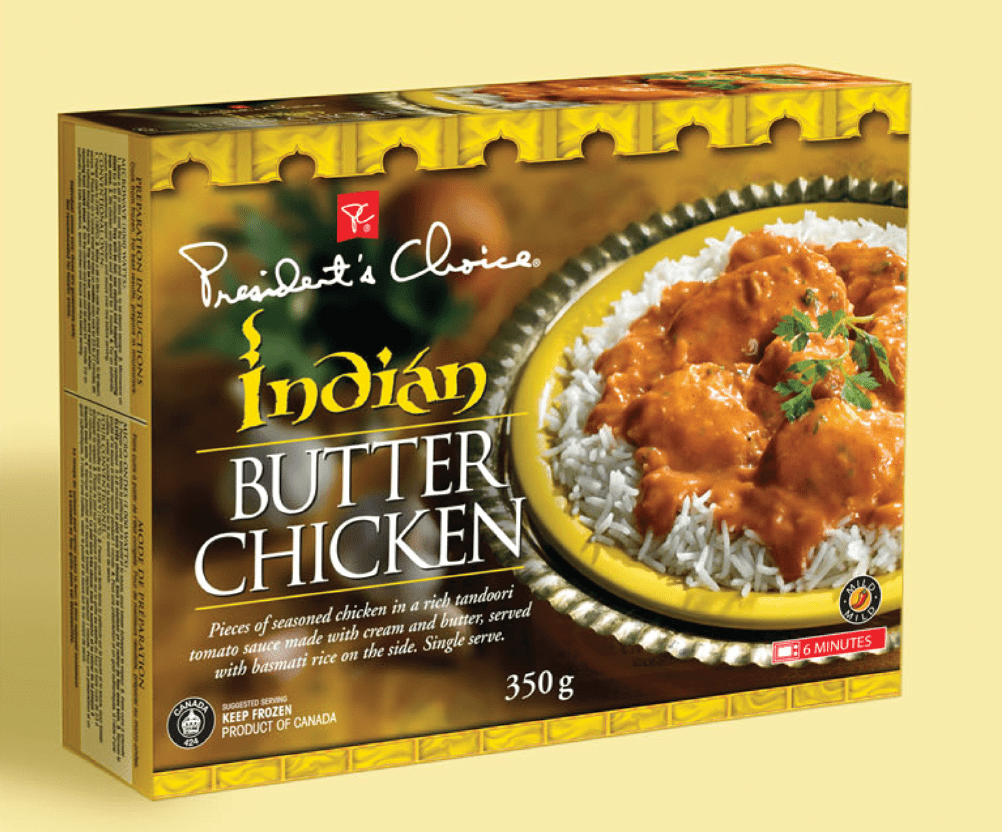
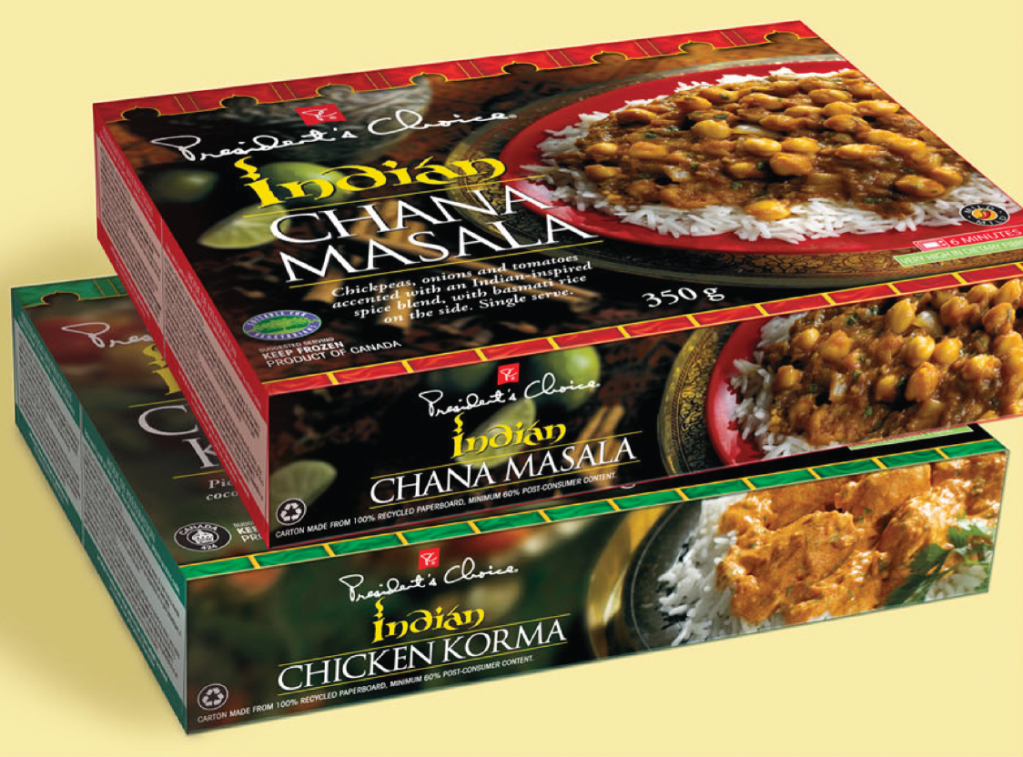
I reflect on the origins and impact of Canada’s most successful private-label programs by tracing how Loblaws, under Dave Nichol’s visionary leadership, transformed brands like President’s Choice and No Name into cultural icons through strong brand identity and emotional connection. I draw from my own experience in Loblaws’ design department. We were considered stewards of the brands. Learning from the original architects, embracing high expectations, and contributing award-winning design work that upheld values of creativity, authenticity, and global discovery. I contrast this formative era with today’s diluted private-label landscape, where products often feel interchangeable, and argue that the enduring lesson of President’s Choice lies in its focus on exclusive experiences and authentic storytelling as the foundation for loyalty and long-term success.
 Angelo Morano RGD